After Switching to Solar Together With Neighbors, This Deacon’s Bills Dropped Down to Zero
By Invest in Our Future
The team at Invest in Our Future believes the strongest case for clean energy comes from the communities and places already seeing its benefits. That includes the growing number of families that are saving hundreds every month after tapping into affordable rooftop solar.
Today, we’re highlighting the story of one such family in Denver, Colorado, whose utility bills went all the way down to zero – and then actually went negative – with the help of IOF grantee and Builders Network member Solar United Neighbors. A national nonprofit, SUN works to help groups of neighbors make the ‘switch together’ to affordable clean energy, and they’re hopeful two recent federal rulings could help scale their work and empower more low-income families to reduce their energy costs.
For Joshua Knight, a deacon from Colorado, switching to solar energy had long made sense as an extension of his family’s Catholic faith.
“We believe that being good stewards of the Earth is part of our responsibility,” said Joshua, who is raising four children with his wife in North Denver, “especially for the sake of our kids and the world they will inherit.”
But he had a million questions about solar energy: What does it cost to install the panels? What’s the timeline for our household? Are we going to save money on our bills?
As the family began to look into making the switch, they came across Solar United Neighbors (SUN), a nonprofit that acts as a trusted intermediary to help large groups of neighbors install solar panels, battery storage systems, or both. SUN brings together these groups in communities across the nation, leveraging their collective purchasing power to help them secure better deals and providing their own expertise and support along the way.
For Joshua, going through the process with his Denver neighbors made a real difference. “It felt good to know that we were not doing this alone, and that many families across the city were working toward the same goal of producing clean, local energy,” he said.
Last year, SUN helped Joshua and his family apply for the City of Denver’s income-eligible solar rebate. They also connected the family with a vetted solar installer through the Switch Together program, which the group leads in partnership with iChoosr and local governments in different cities across the United States. “Being part of a large group helped create more affordable pricing, and the rebate made the project possible for our family,” Joshua said.
Once their solar panels were installed, the family’s utility bills went down dramatically. Not only did they go down to zero, but by September of last year, “our energy bill has consistently been negative, which has been incredible to see,” he said.
Stories like Joshua’s are made possible by trusted intermediaries like Solar United Neighbors, whose expertise helps reduce the upfront costs of installation and demystify a process that can seem confusing and unattainable.
“Going solar can seem complicated, but it doesn’t have to be,” said Anya Schoolman, Solar United Neighbors’ executive director. “People want to save money by taking control of where their energy comes from, but they may not know where to start. That’s where we come in.”
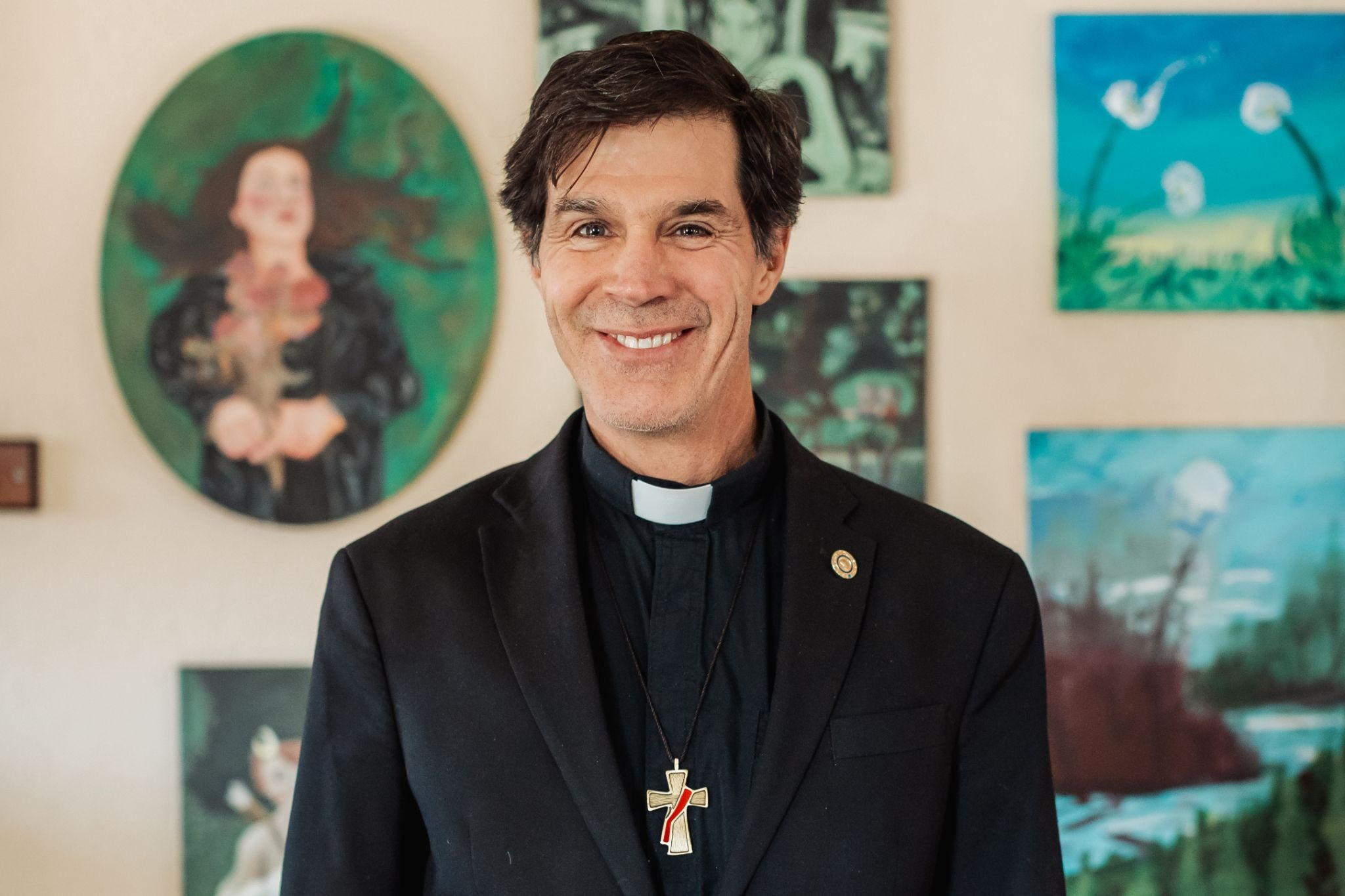
Deacon Joshua Knight, who recently switched to solar with his neighbors, in Denver, Colorado.
Solar United Neighbors started with a simple question: “Mom, can we go solar?”
Anya received this question from her son Walter back in 2007. He and his friend, Diego, had just seen the movie An Inconvenient Truth and felt motivated to act. Anya looked into it, but found the process to be complicated and expensive.
Anya then had a thought: “For all the time and effort it would take to get solar on my home, I might as well help the whole neighborhood solar, and we may even get more favorable pricing.”
Walter and Diego took on the challenge; they canvassed up and down the block and got 50 families to join. Word of their group soon spread across Washington, D.C., and other bulk purchase groups sprouted with support from the first one.
Fast forward to today, and Solar United Neighbors has now hosted nearly 500 bulk purchase groups across the country, building a 1-million-plus-strong community of solar supporters.
This has given the organization the opportunity to advocate for policies that expand who can benefit from solar energy, launching pilot programs across the country to help income-qualified families receive solar installations on their homes.
These successful experiments inspired the federal Solar for All program that was part of the 2023 Inflation Reduction Act. Solar for All would fund free or discounted solar installations and battery storage or community solar projects for qualified participants. It awarded 60 grants to states, territories, Tribal governments, municipalities, and nonprofits to implement this work.
“At a time of skyrocketing energy bills, Solar for All would let families with the highest energy burden lower their bills by taking control of where their energy comes from,” Anya said. “It is a smart investment that creates good local jobs and healthier communities.”
In 2024, SUN began its work with Solar for All programs across the country. It hired seven staff members to work on Solar for All in Florida. The program’s design was in its final stages. It even had a website and a waitlist for participants.
But in August of 2025, the EPA moved to rescind funding that Congress obligated to Solar for All. That put SUN’s work on hold. That October, SUN joined others in a lawsuit arguing that the EPA’s action was illegal.
Late this summer, the program had two major wins in the courts that gave organizations like SUN hope for its future. Two separate judges ruled EPA’s decision to end Solar for All was done illegally, including one case filed in Rhode Island in which SUN was named as a plaintiff.
While these rulings cannot force EPA to pay out the grants, they create strong legal precedent for them to do so. They would also reinforce administrative appeals, breach-of-contract lawsuits, and other types of advocacy currently in progress, and they’d prevent EPA from acting under the argument that the OBBBA terminated the program, ensuring the funds stay in Treasury accounts through 2031.
“The Knight family’s story is one example of the power of solar energy,” Anya said. “It provides lower electric bills, peace of mind, and freedom. Restoring Solar for All would grow our ability to help a couple of hundred families at a time to helping hundreds of thousands.”